One site, eight processes
Spinning, knitting, weaving, dyeing, finishing, printing and embroidery, sewing thread, and garment making. Nothing leaves the compound between the bale and the box.
Our Capacity a month
Yarn
1
120 Tonnes
110 Tonnes
2
Knitted Fabric
Woven Fabric
3
100 000 Metres
Garments
4
500 000+ Garments
Sewing Thread
5
20 Tonnes
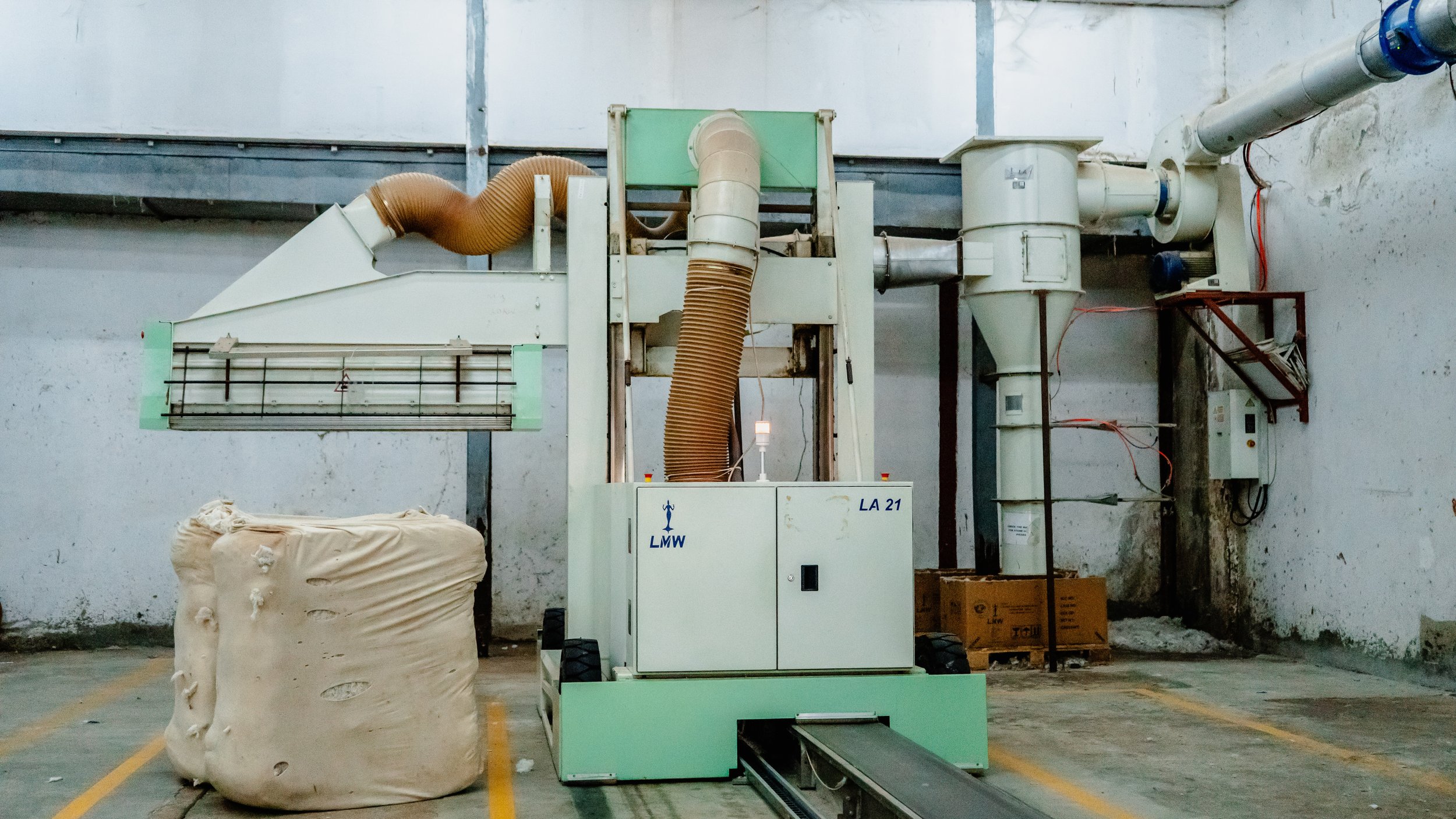
An LMW Swiftloc LA21 plucker feeds the line automatically, taking thin layers off the bale so the fibre is not torn at the start.1 Bale Opening
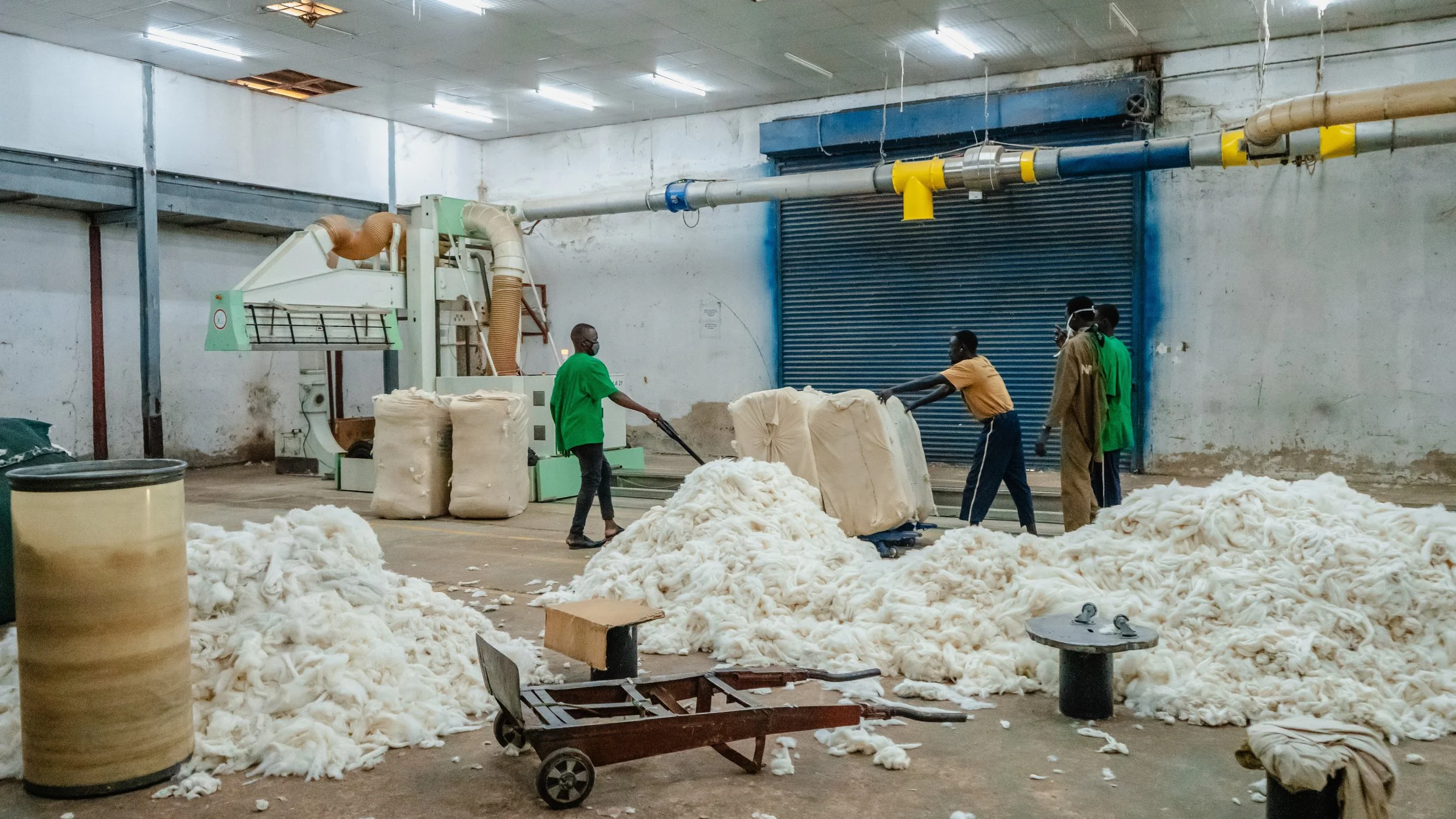
LMW fully automated blowroom that meticulously removes foreign fibres and stems from the hand picked cotton. 2 Preparatory
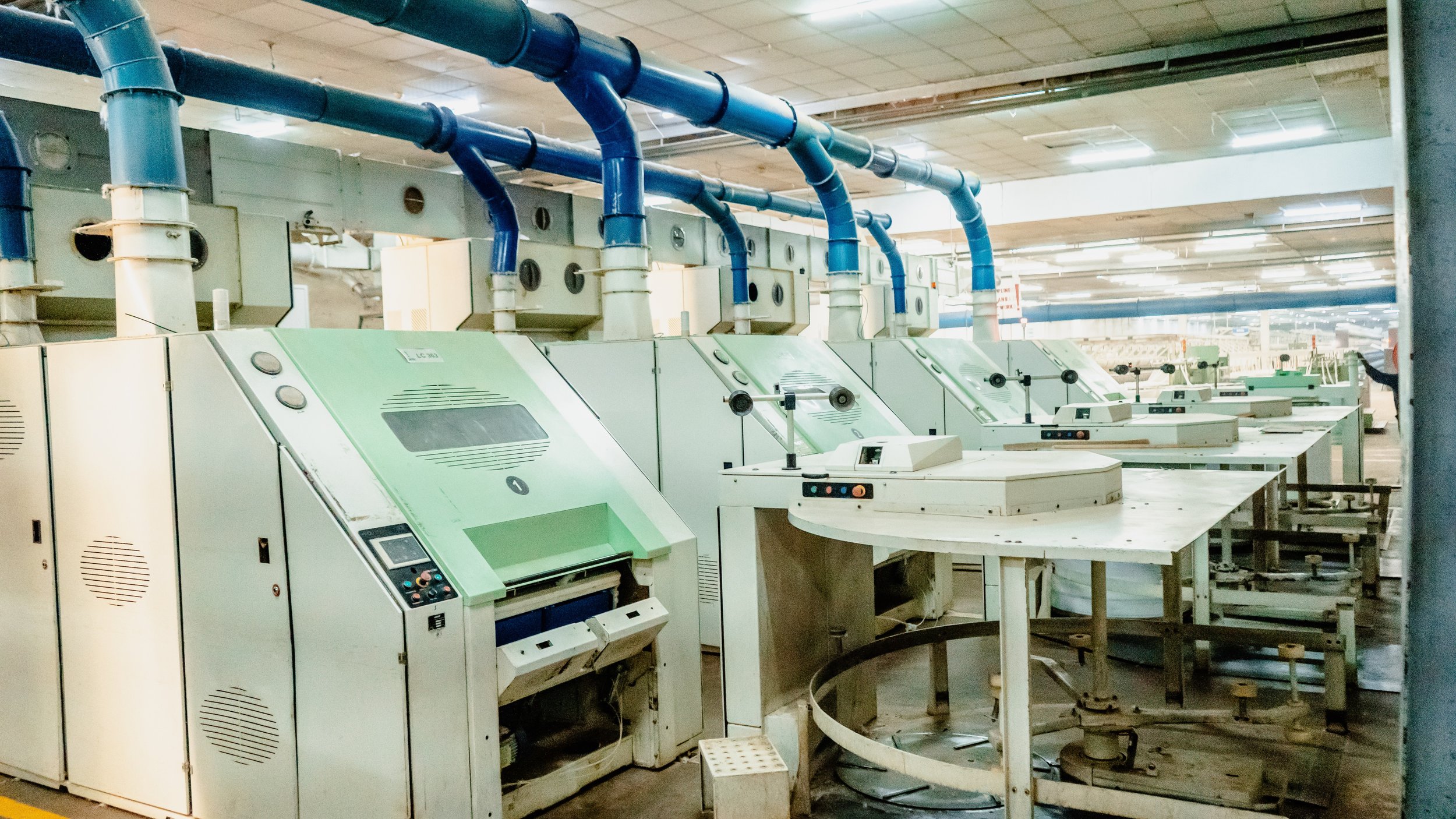
Four LMW cards, then Rieter and LMW combers remove short fibres. This is the step that separates a smooth fabric surface from a hairy one.3 Carding & Combing
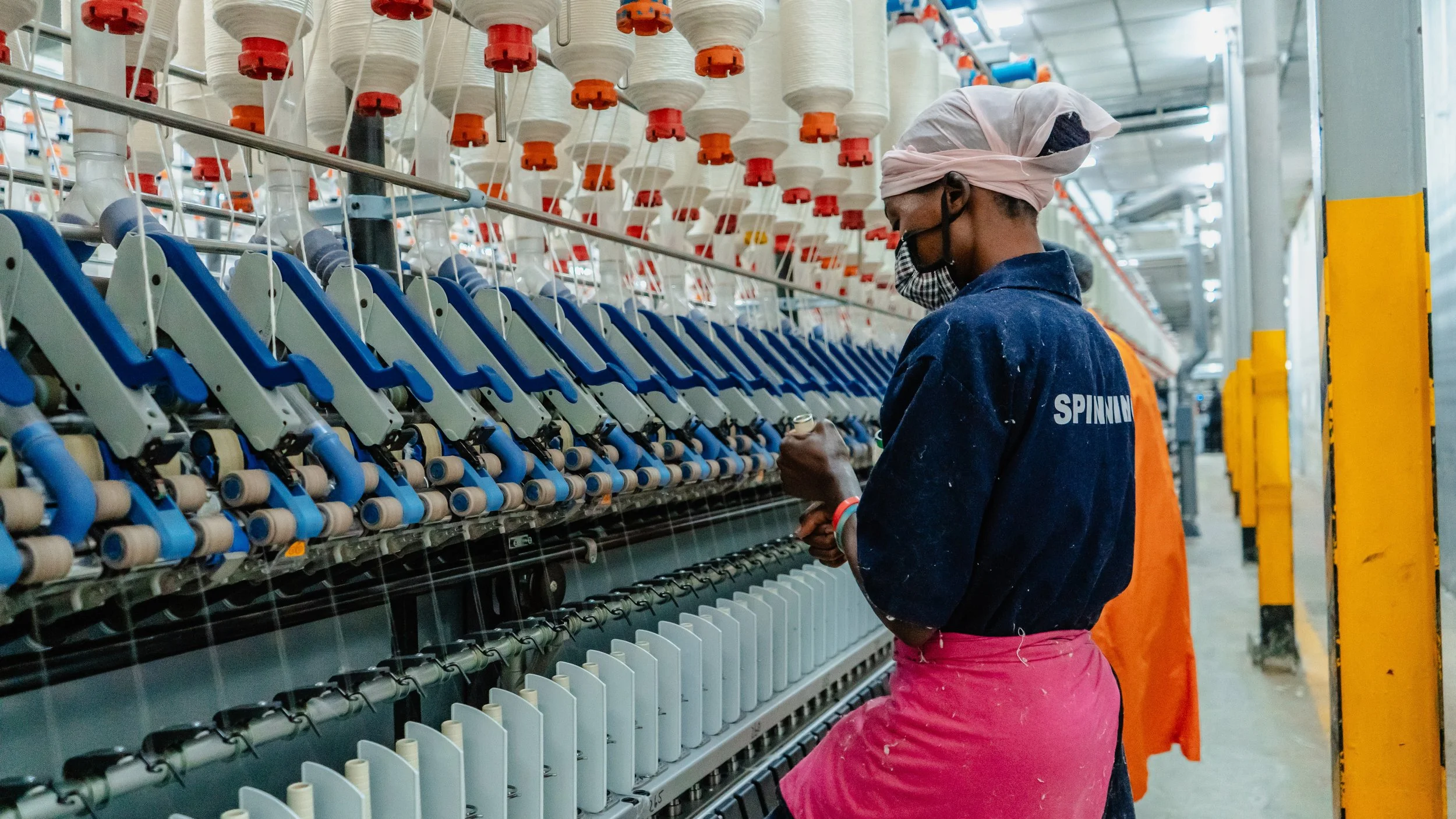
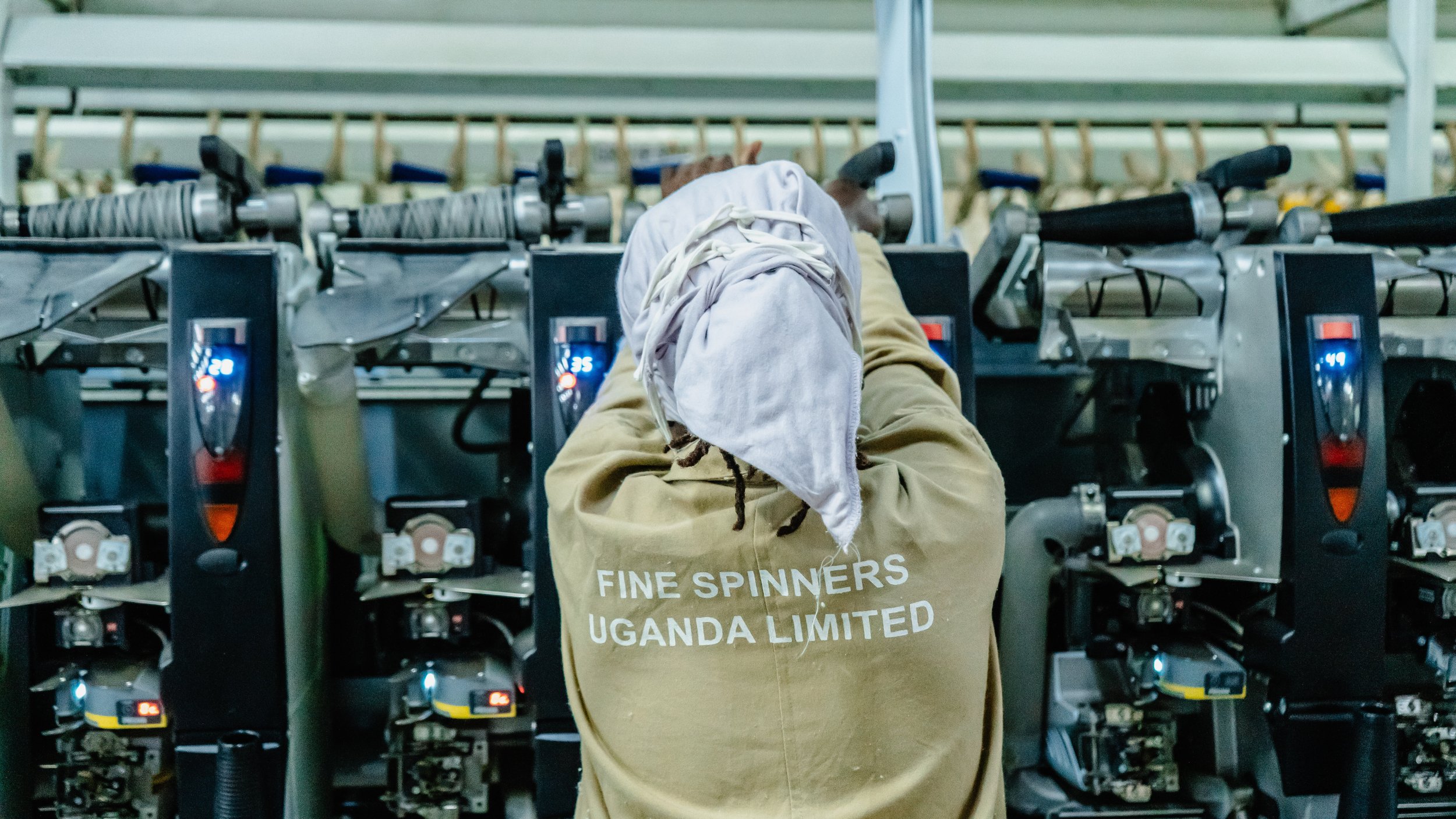
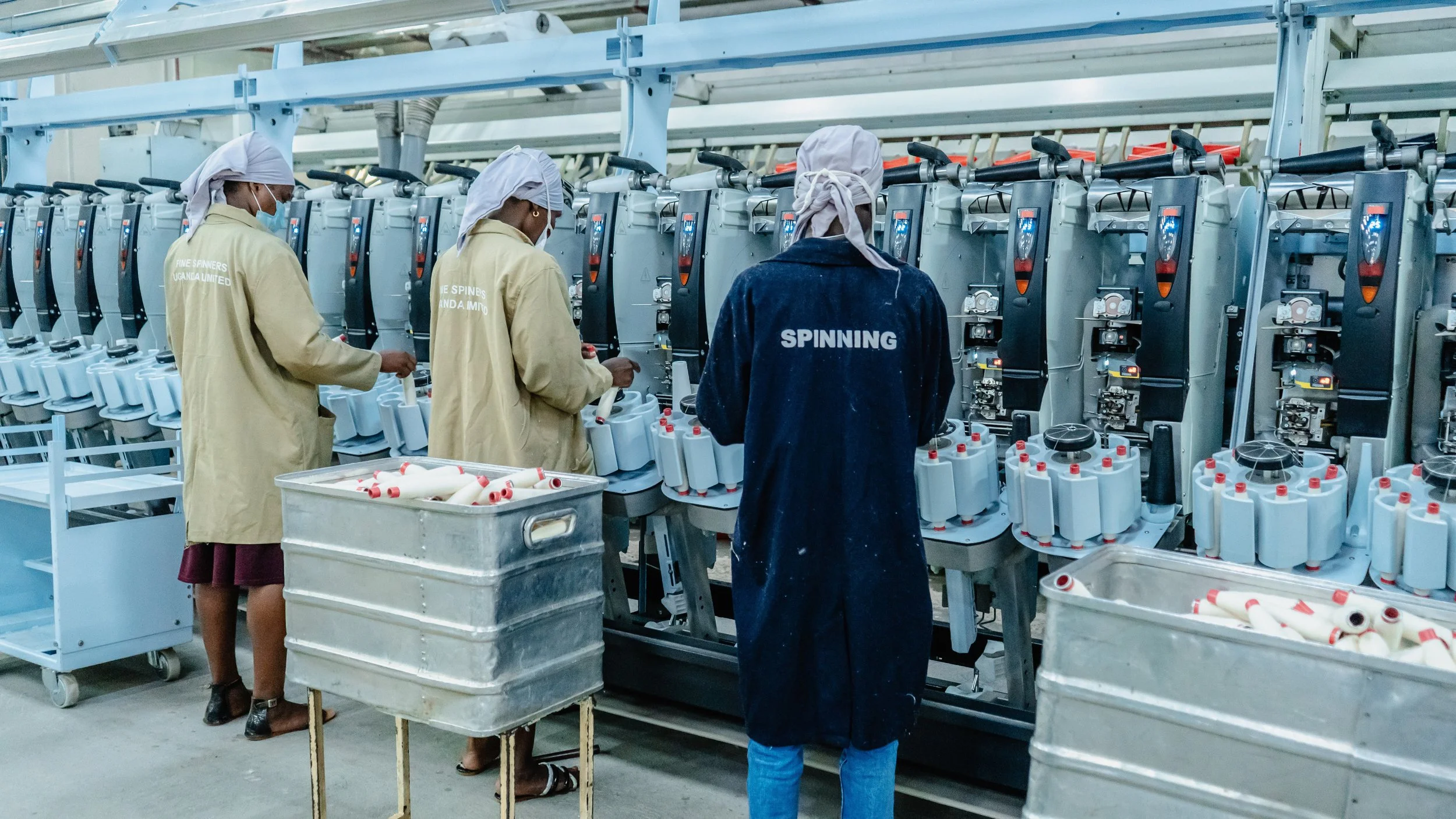
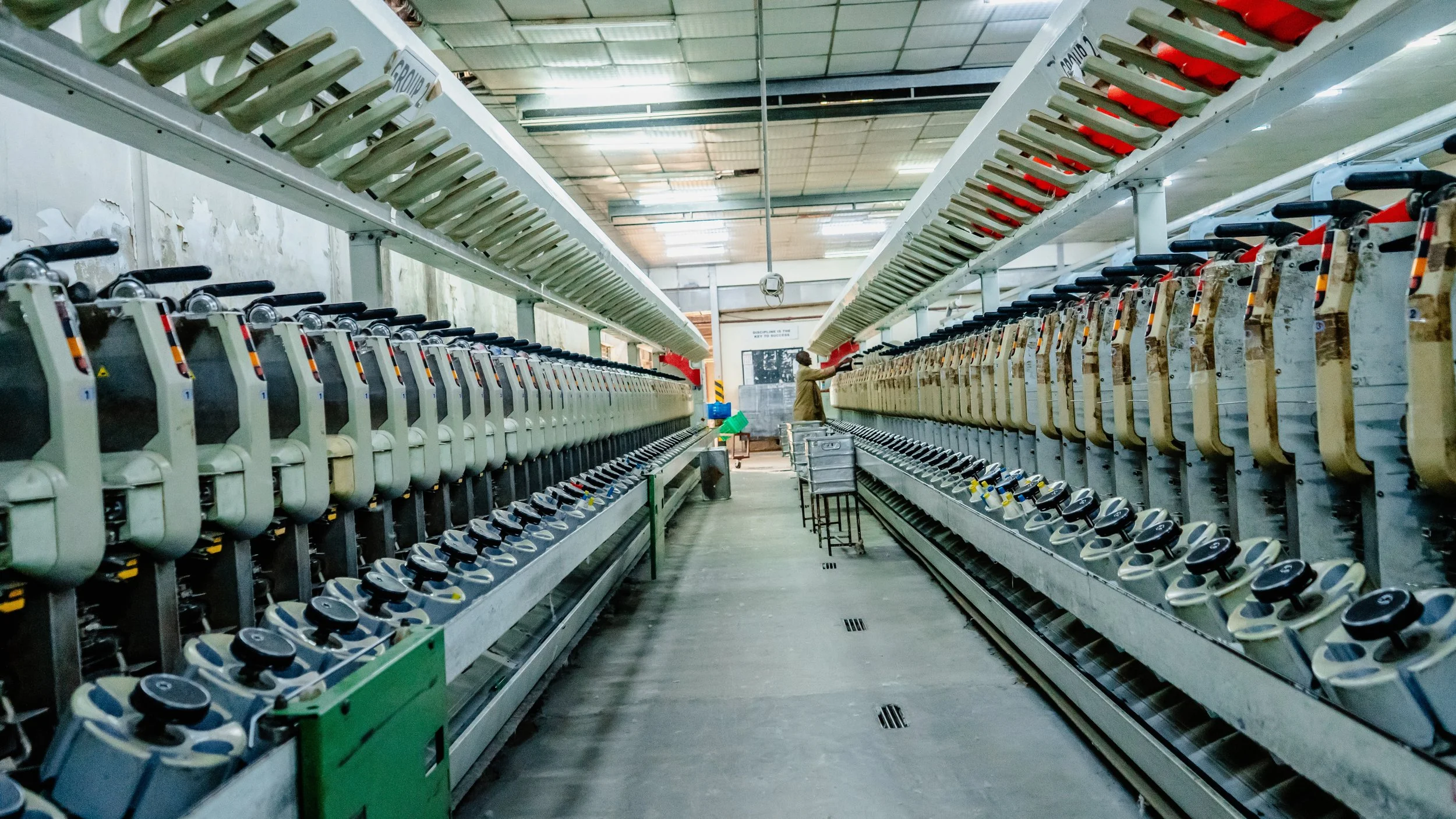
LMW and Saurer Zinser ring frames, including compact systems with foreign-fibre detection. Cones are wound on Rieter and Schlafhorst Autoconers.4 Spinning
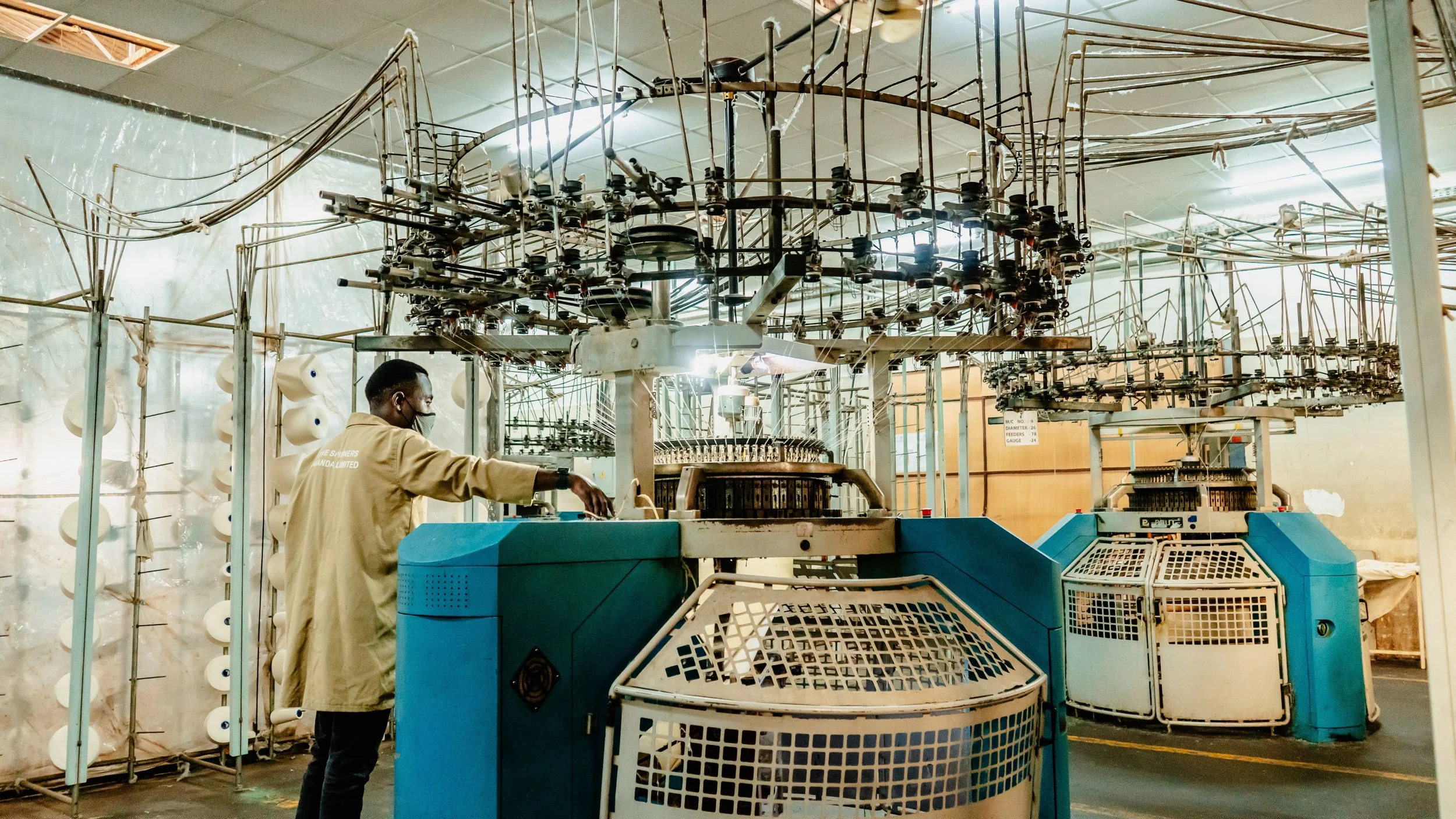
Fifteen Pailung circular knitting machines from 15 to 28 gauge, and a Picanol Ultimax rapier loom at 190cm for wovens.5 Knitting/Weaving
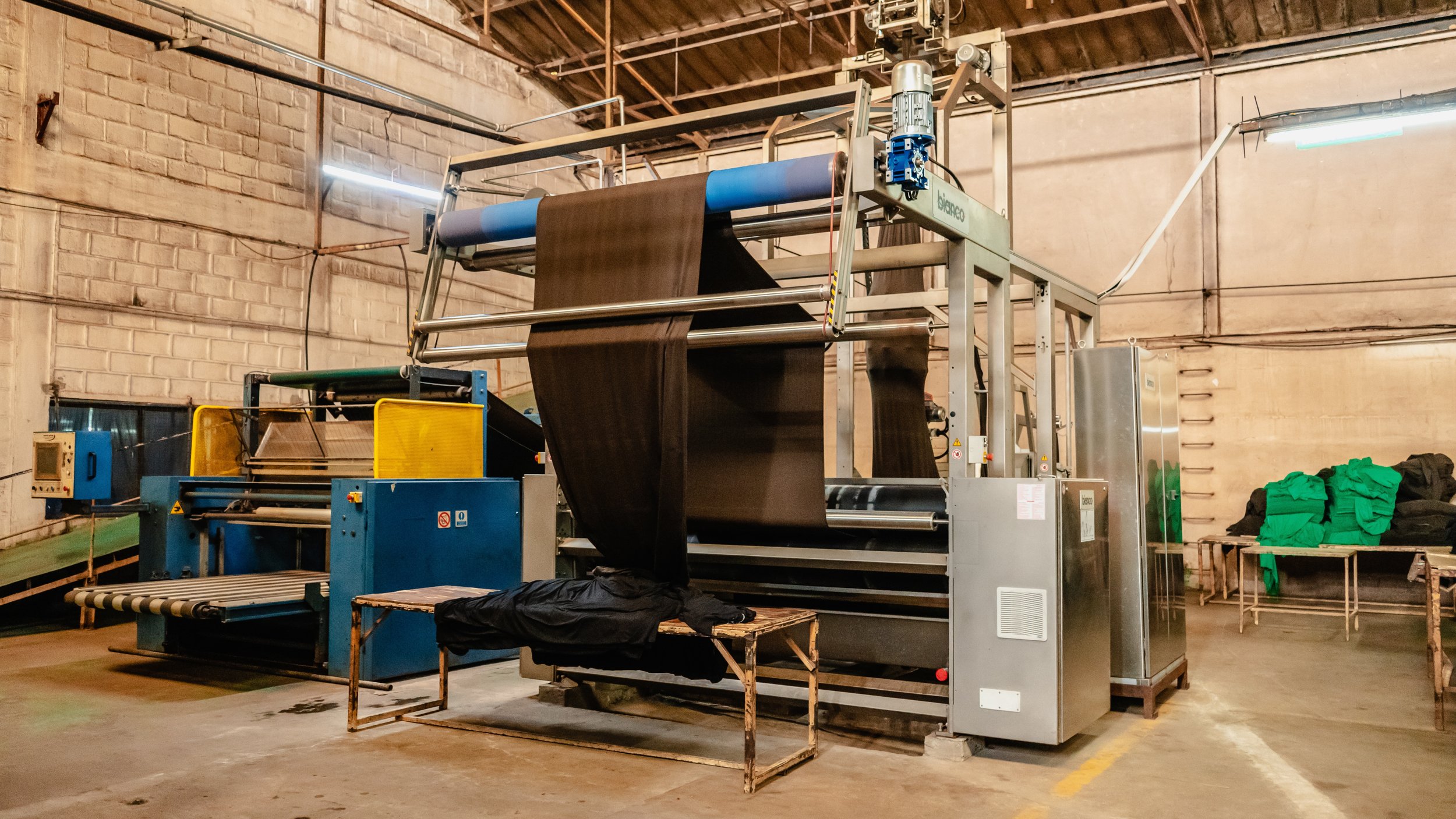
Thies and Fongs dyeing machines from 10kg to 500kg lots, an automated colour kitchen, and a Brückner stenter for heat-setting.6 Dyeing & Finishing
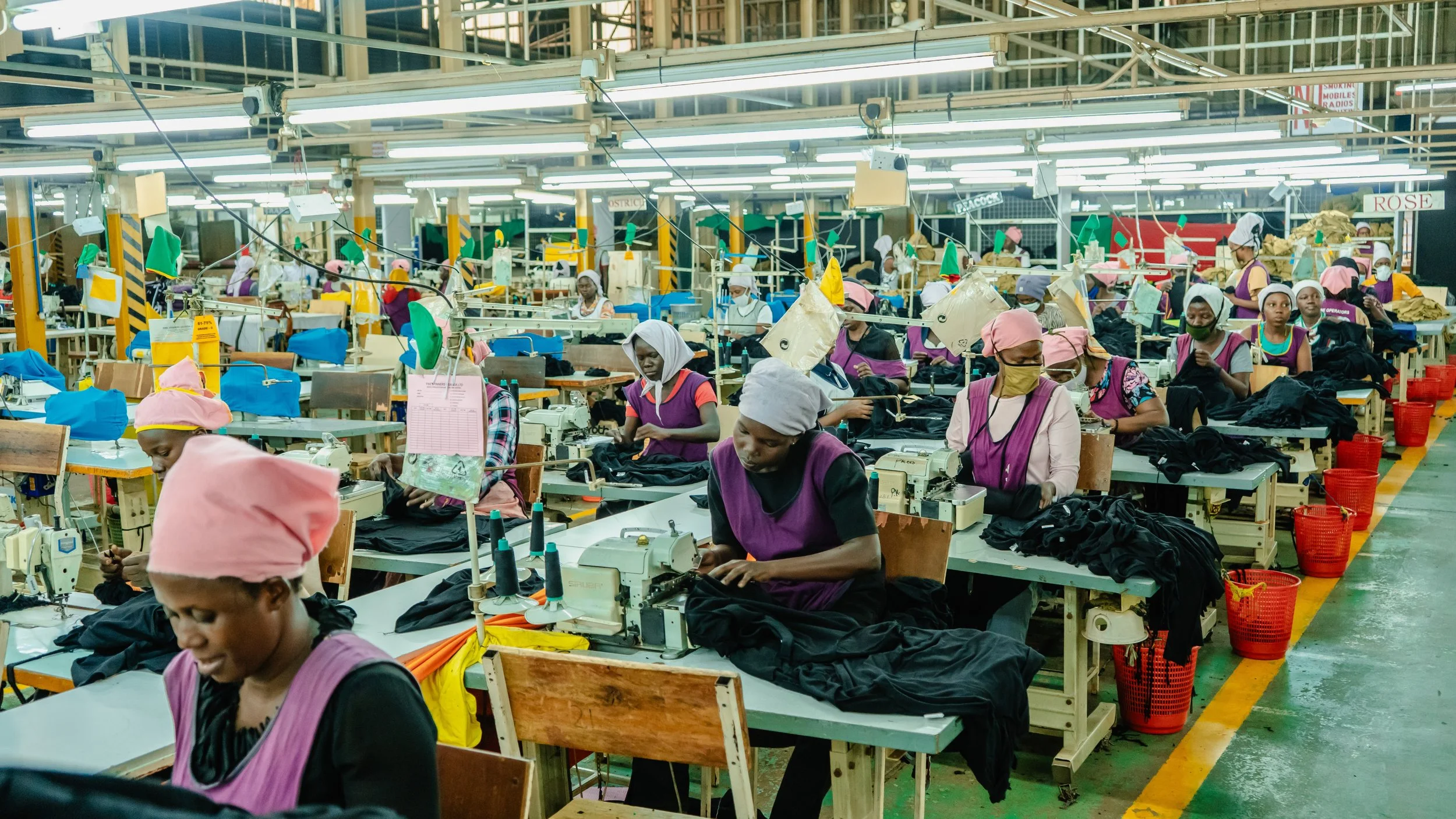
7 Cutting & Sewing
Eight production lines and 304 sewing machines, fed by CAD-plotted markers.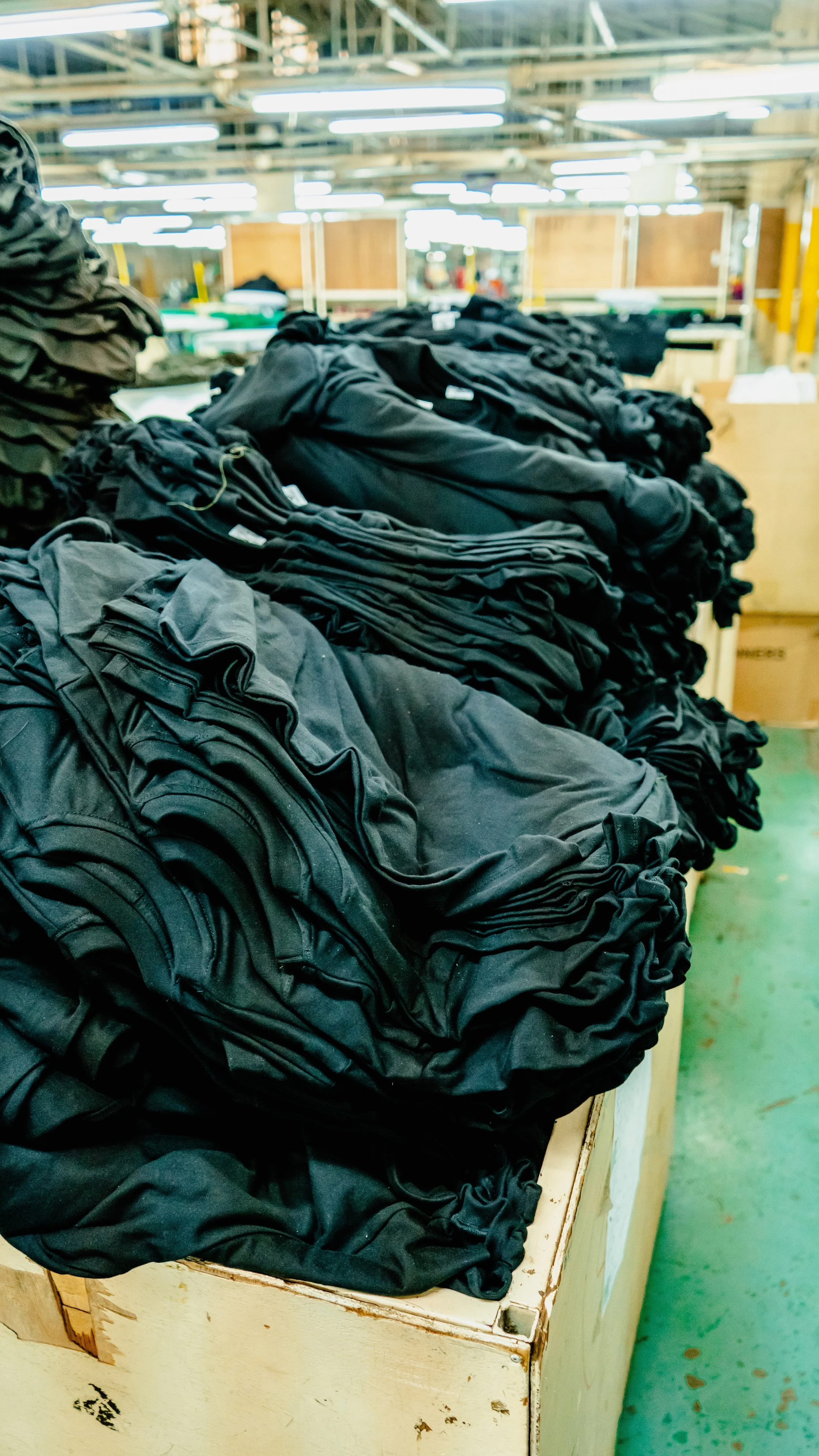
Every roll graded on the 4-point system. Garments inspected, folded, bagged and boxed to the buyer’s specification.8 Inspection/Packing
Why Machines Matter
Cotton fibre can only be damaged, never improved. Every process between the field and the garment either preserves what the plant produced or takes something away from it. That is the logic behind the recent rebuild: we replaced equipment at the points where the loss would be permanent.
Compact spinning binds the fibres more tightly, so the yarn is stronger and sheds less. Combing removes the short fibres that make a fabric surface fuzzy. Automated dye dispensing removes the human variation between one batch and the next. Heat-setting on a stenter fixes the width and the shrinkage so the garment still fits after washing.
The machinery makes all the difference in quality.
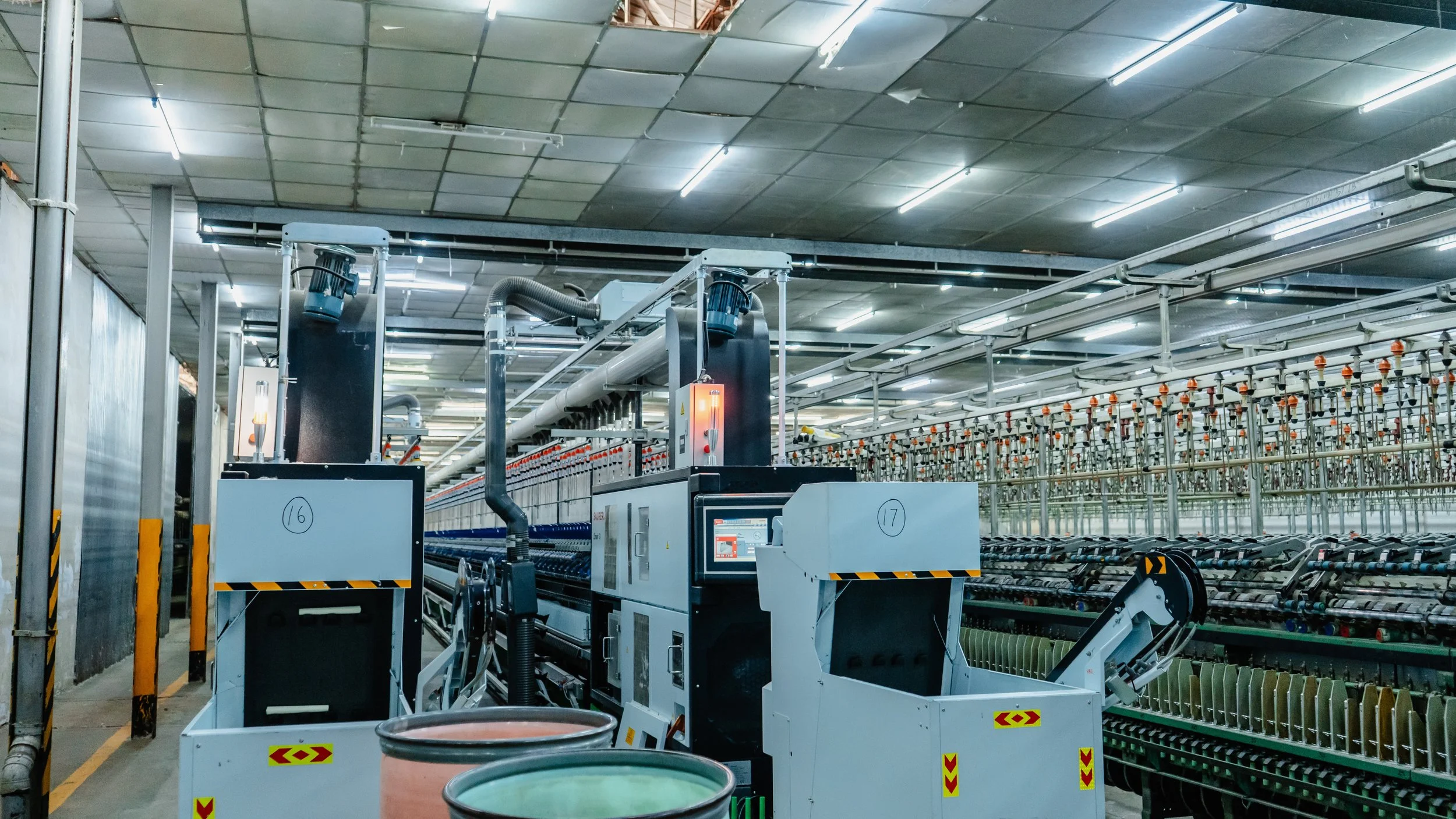


Spinning
carded, combed and compact cotton yarns. 120 t/monthKnitting/Weaving
jersey, pique, lacoste, rib: 110 t and 100,000 m/monthDyeing & Finishing
10kg to 500kg lots, automated colour kitchen, functional finishesPrinting, Embroidery & Thread
twelve print types, 20-head embroidery, A&E-licensed threadGarment Factory
8 lines, 304 machines, 500,000+ units/monthQuality & Testing
in-house lab, colour match in 48 hours, 4-point gradingWe make our own sewing thread
Fine Spinners is an East African manufacturing partner of American & Efird, a thread company founded in 1891 whose products are OEKO-TEX 100 certified, GRS certified and Cradle to Cradle. We produce thread under that licence, on SSM winding equipment from Switzerland, at 20 tonnes a month. Because we dye yarn in-house, the thread in a seam can be matched to the fabric it is sewing rather than approximated from a shade card.
Range: polyester and cotton industrial sewing thread, recycled ECO100 thread to GRS standard, and technical threads. Counts 40/2, 45/2 and 20/6 polyester, Tex 40 to Tex 300. We supply externally as well as using it ourselves.Recent Client
Let’s work together