Kasese and Mbale, about 16,000 farms
Where it comes from
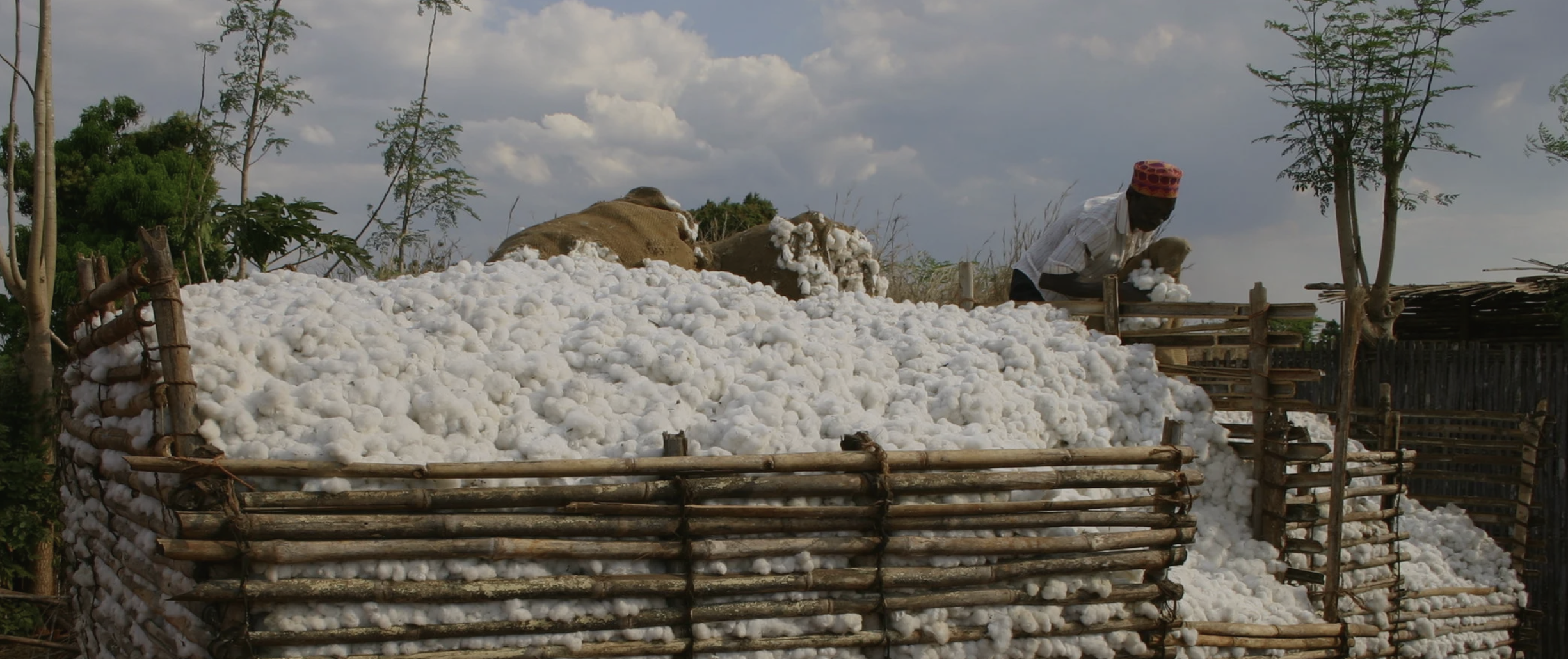
Most of our lint comes from the Kasese region in the west and the Mbale region in the east, bought through ginneries that buy directly from a network of around 16,000 smallholder farmers.
Our primary cotton comes from two ginning assets in those regions. Both are managed by a third party; we buy from them at arm’s length and hold no stake in them.
We say this plainly because it matters for how our traceability claims should be read. We can tell you the region and the ginnery your fibre came from. We do not own the ginneries.
Why the fibre is good
Staple length is the measure that matters most to a spinner: the longer the fibre, the finer, stronger and smoother the yarn that can be made from it. Ugandan cotton falls in the long staple category, around 28.5mm, which is longer than a great deal of the world’s crop.
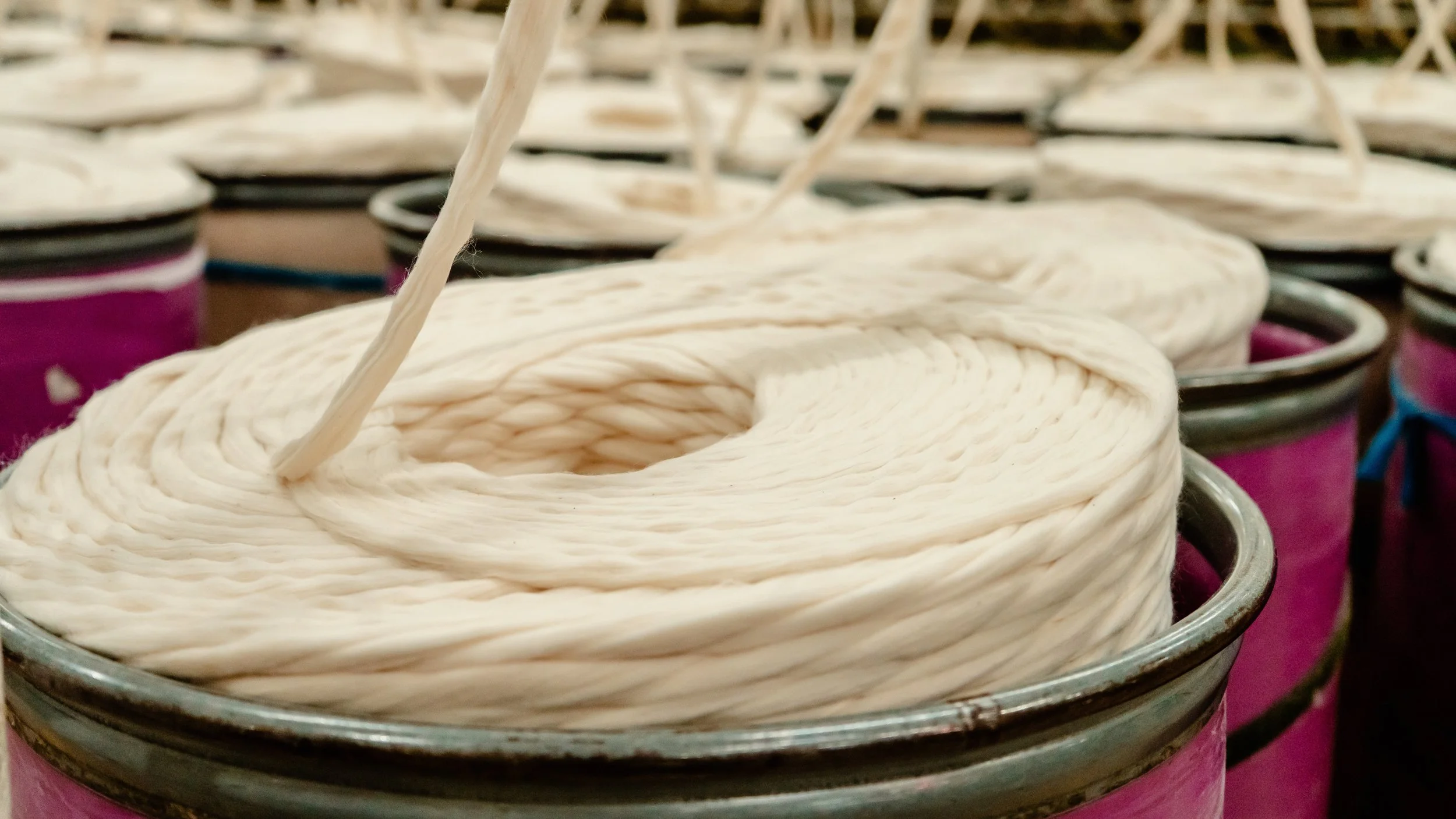
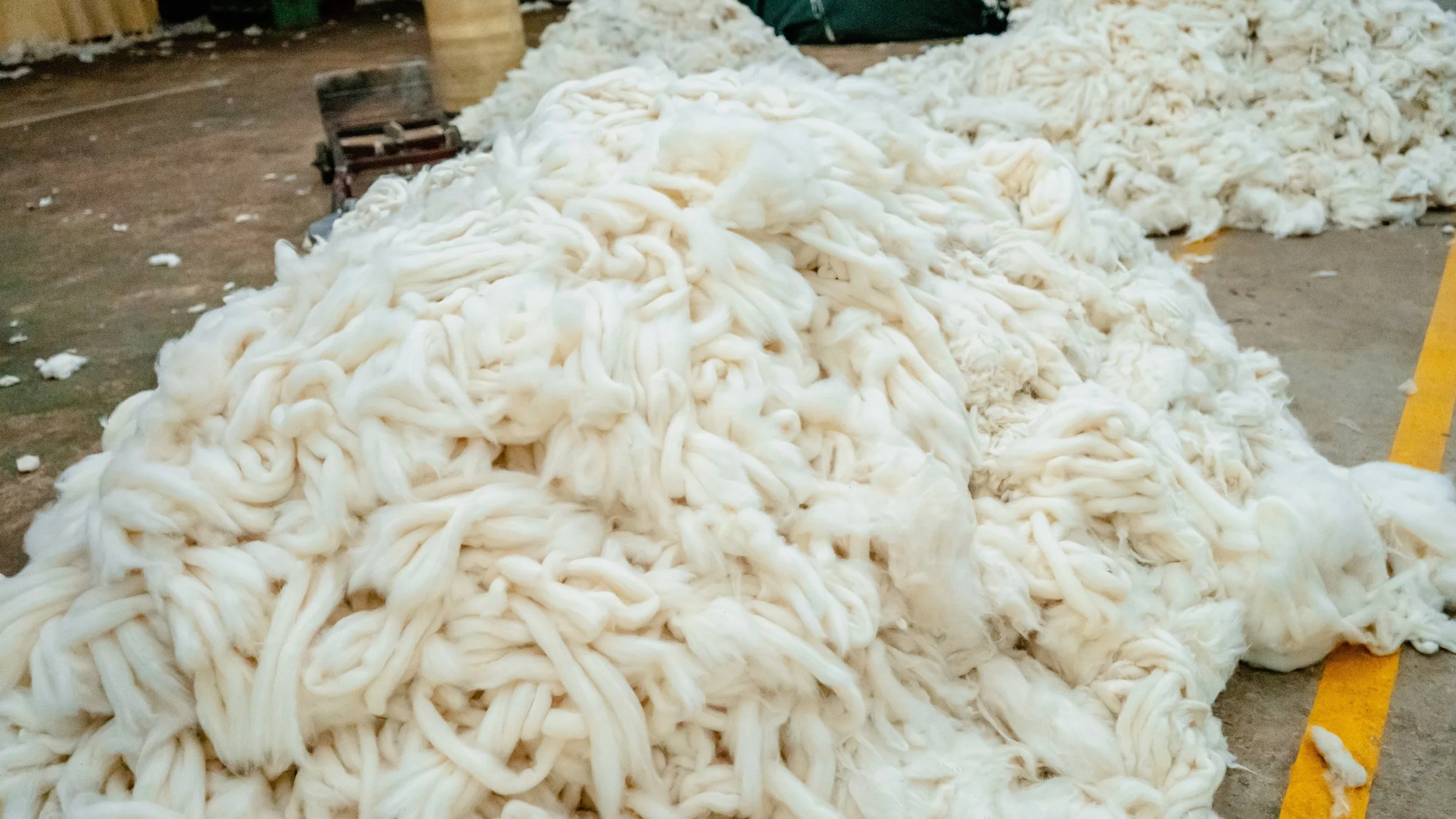
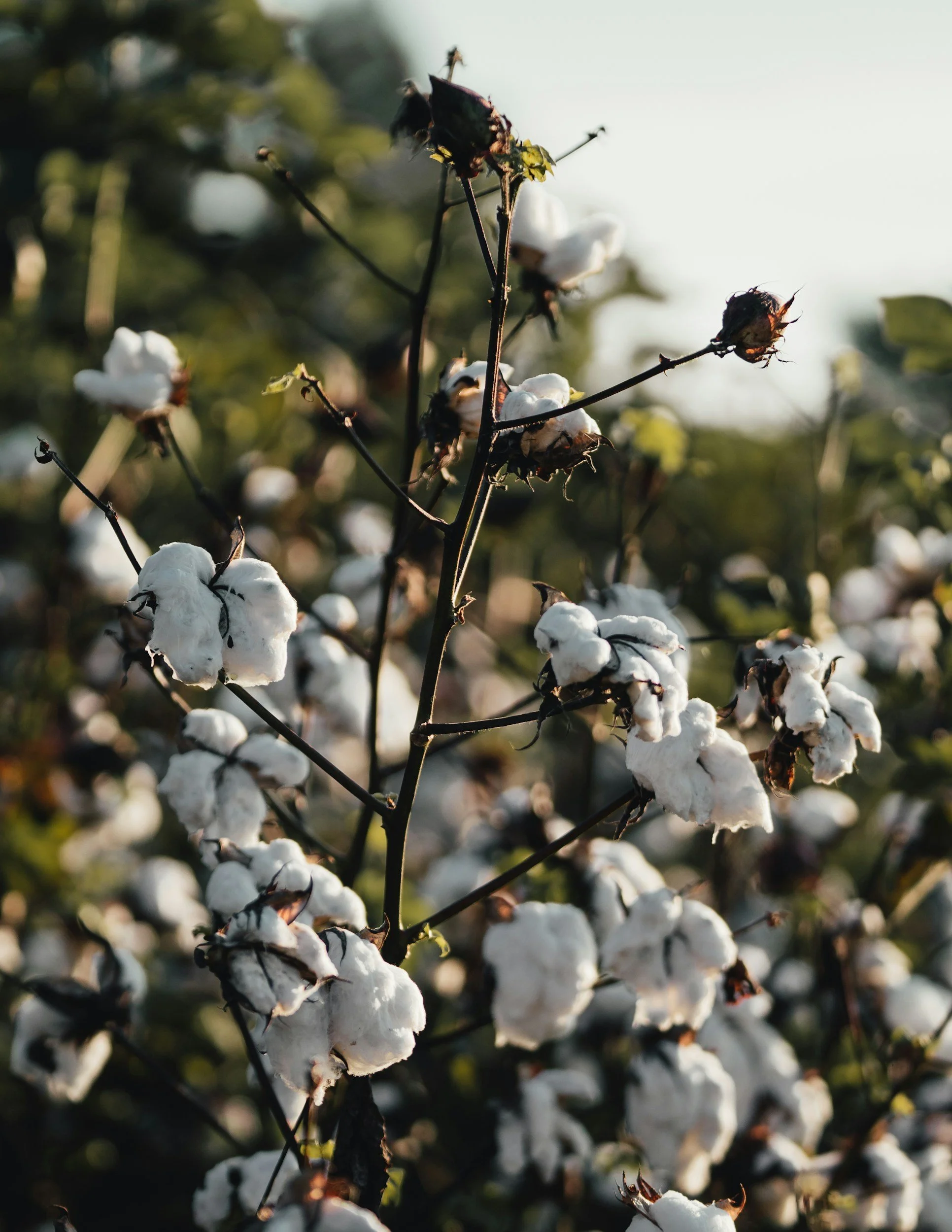
It is grown under rain and sun with no irrigation, and picked by hand. Hand picking is slower than a machine, but the machine takes soil, leaves and twigs into the bale with the cotton, and it needs a defoliant sprayed on the crop first.
Hand-picked cotton arrives cleaner and carries less chemical residue.
Cotton is a natural fibre. It is breathable, it regulates temperature, it takes dye well, it sheds no microplastic, and at the end of its life it biodegrades and returns nutrients to the soil.
Cotton made in Africa
CmiA is an initiative of the Aid by Trade Foundation and an internationally recognised standard for sustainably produced African cotton. It sets criteria at farm and ginnery level and verifies them independently.
Under the standard, cotton is grown on rainfall alone, without genetically modified seed, with pesticides and fertiliser restricted and managed, rotated with food crops, and picked by hand. Farmers are trained in the growing methods.
Child labour and forced labour are prohibited under ILO conventions.
Fine Spinners is registered with the Aid by Trade Foundation as a supplier of CmiA yarns, fabrics and finished products, and our ginneries are verified at farm and ginnery level. Cotton is tracked through the SCOT system to licensed CmiA brands and retail partners.
Across the CmiA system: around 900,000 farmers, eleven growing countries, 508,000 tonnes of cotton available worldwide, and more than sixty retailers and brands using it.